

the insights worth knowing.
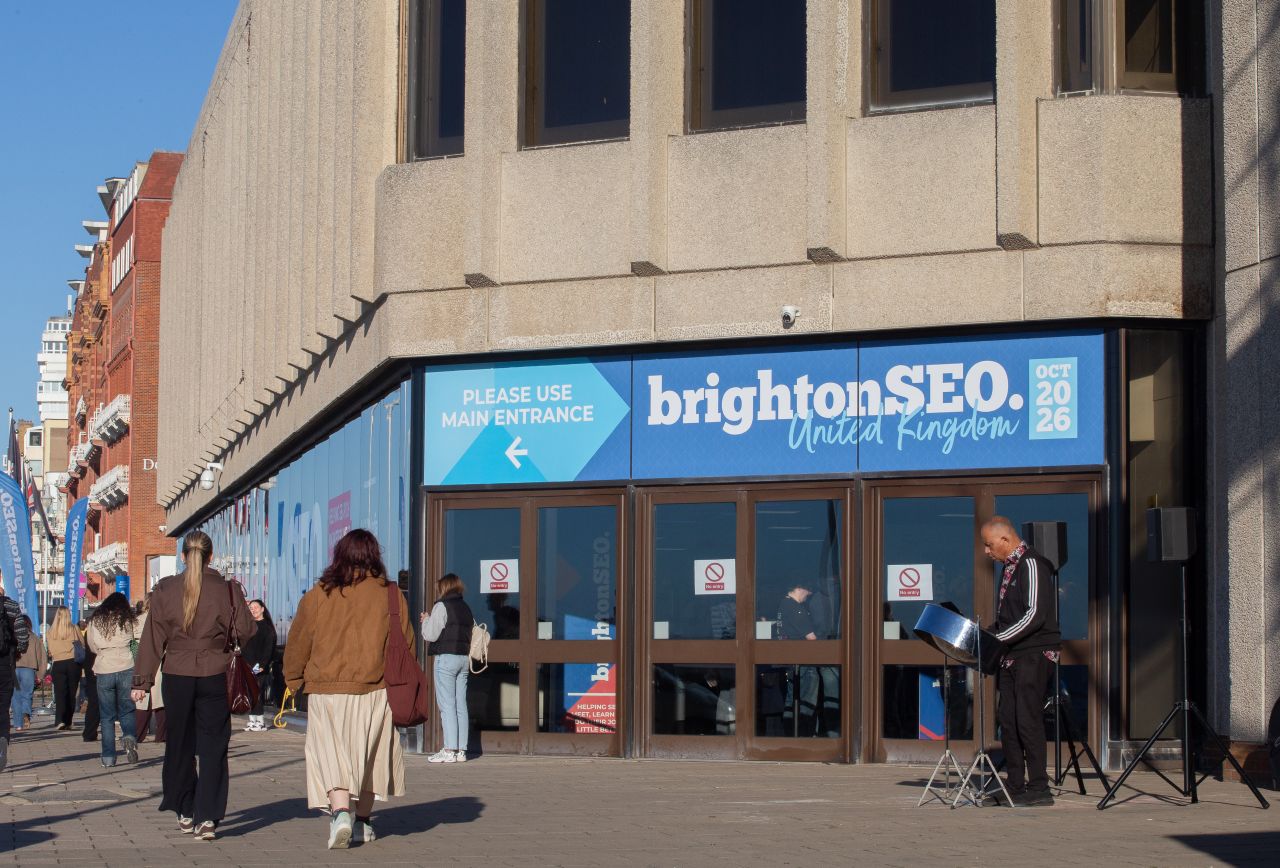
brightonSEO was back in its rightful place on the seafront this October, gathering all of the hungriest minds in search marketing and delivering a feast of insights on all things SEO and content and, of course, AI.
We were once again proud sponsors with a stand full of goodies that went down a treat, and loved meeting a ton of you lovely lot at our stand.
We also deployed our intrepid troops to all the talks to get the best insights and report back.
One theme ran through many of the sessions: the importance of understanding your audience and giving search platforms reliable, useful information about your business.
Learn what we learned and what it actually means in actionable terms here.
TLDR; top insights from October’s brightonSEO.
- Every section of your content should answer a question independently to improve its chances of being cited in AI search.
- Use search queries to uncover purchasing objections and improve content on pages that attract traffic but struggle to convert.
- Product and landing pages accounted for 39% of AI citations in research presented by PromptWatch, so prioritise optimising these commercial pages.
- Test AI visibility across real customer conversations, because single-prompt tracking can miss how previous questions and conversational context influence which brands AI recommends to a user.
- Make your business easier for AI to understand by keeping schema markup and product information accurate, and make trust signals such as customer reviews and certifications visible.
- Optimise TikTok content for search intent: With 73% of users reportedly searching daily, use Creator Search Insights to identify content gaps and reach potential customers.
SEO and content.
The ‘scissor test’: a simple way to make your content more likely to be surfaced by AI.
As AI systems increasingly retrieve individual passages from webpages to generate answers, content needs to make sense even when separated from the rest of the article. Emilio Takas, Head of SEO & Growth at Campeon Gaming, recommended applying the ‘scissor test’ in his session, Masterclass: Content Strategy in the AI Era. The idea is simple: could you cut out any section of your content and still have a complete, useful answer to a question?
Takas recommended focusing on one idea per section, supported by clear evidence and attribution. For example, when referencing research, specify the source, date and what the findings mean. Comparison tables can also help AI systems interpret information more easily.
He also suggested searching for questions you want your brand to be cited for, examining the passages AI currently references and identifying where your content could provide a better answer.
Your practical takeaway:
Apply the scissor test to your highest-value service and product pages first. Focus on answering the questions potential customers ask before buying, giving AI search a better chance of surfacing your business when purchase intent is high.
Group keywords by customer problems to uncover better content opportunities.
Search queries can reveal valuable insights into what customers want and what’s preventing them from converting. Independent SEO consultant Rüdiger Dalchow of Grumpy Old SEO explored this in his talk, How to Turn Search Data into Market Intelligence. He recommended grouping keywords by their commercial meaning, such as customer concerns, objections and desired outcomes, to identify opportunities that traditional topic-based keyword research might overlook.
Dalchow also encouraged businesses to examine what competitors are known for, alongside their search rankings, and to turn SEO reporting into actionable decisions. For example, a page attracting plenty of traffic but few conversions may indicate that its content isn’t addressing the questions customers need answered before purchasing.
Your practical takeaway:
Review search queries for your highest-traffic, lowest-converting pages to identify unanswered customer questions or objections. Use these insights to improve your content and turn more existing traffic into enquiries or sales.
Get expert help with your website content writing.
39% of AI citations come from product and landing pages. Are yours optimised?
At BrightonSEO, Gijs de Groot, Co-Founder and CEO of Promptwatch, explored AI search visibility in his talk, The Trust Problem Nobody Is Solving in AI Search: These AI Optimisation Tactics Could Tank Your Traditional Rankings. His research found that 47.6% of ChatGPT answers cited ten or more domains, highlighting the importance of having consistent, credible information about your brand across multiple sources.
De Groot also revealed that product and landing pages accounted for 39% of AI citations in the research presented. He recommended aligning content with the prompts businesses want to appear for, using detailed product pages and customer reviews to support commercial queries, while developing useful guides for informational searches.
The research also found that most pages cited for a particular query were no longer being cited after 90 days, suggesting that AI visibility can change quickly and requires regular monitoring.
Your practical takeaway:
Prioritise your highest-revenue product and service pages for AI optimisation. Strengthen their content with detailed FAQs and credible customer reviews, then review performance quarterly to maintain visibility for searches that could generate sales or enquiries.
Make your assets AI-accessible.
AI visibility reports may be missing what your customers actually see.
Tom Rudnai, Founder and CEO of Demand Genius, explored the limitations of AI search tracking in his talk, Your AI Visibility Metrics Are Lying to You: How Conversational Context Impacts AI Responses.
Unlike traditional search queries, AI prompts are often part of longer conversations shaped by previous questions and user preferences. Rudnai shared research showing that the same prompt can produce different brand recommendations depending on the conversation leading up to it. This means AI visibility tools that track isolated prompts may give businesses an incomplete picture of how frequently customers encounter their brand.
Your practical takeaway:
Test your brand’s AI visibility using realistic customer buying journeys, including follow-up questions about your products or services. Combine these findings with AI referral traffic and enquiry attribution to better understand how AI discovery contributes to leads and sales.
How to use our 5x5x5 prompt tracking method.
AI needs clearer information about your business to recommend you.
Several speakers explored how structured data and trust signals can help AI systems understand businesses and determine which brands to recommend.
Alex Moss, Principal SEO at Yoast, discussed the importance of accurate schema markup in Maximise Integrity, Minimise Hallucination, recommending detailed business information and Person schema for authors. He also highlighted the growing importance of comprehensive product feeds, including GTINs, as AI agents become more involved in online shopping.
Dixon Jones, CEO of InLinks and Waikay, introduced EntityMap.org in Entity Maps: Brief AI Before It Briefs Itself. Entity maps connect information across a website, helping AI understand relationships between a business and its services. Jones shared early testing suggesting that adding entity maps could increase AI citations.
Judith Lewis, Director at Decabbit Consultancy, and Laura Iancu, Founder of Searchpedia, reinforced the importance of structured data in their respective talks, Schema in the AI Era: From Rich Results to Machine Interpretation and Schema Beyond Rich Results: What Structured Data Actually Does in Modern Search Systems. Both emphasised keeping schema accurate and updated, including information that may never generate a traditional Google rich result.
Trust signals were another recurring theme. In All Mentions Are Not Created Equal in AI Search, Tom Wells of Vaer AI shared research suggesting ChatGPT places greater weight on review volume, while Gemini favours higher ratings in the scenarios tested. He also highlighted how recognised certifications and compliance credentials can influence recommendations.
For local businesses, Sam Page explored the importance of proximity and reviews in Win at Local AEO – The Wild West of AI Search. He recommended encouraging service-specific customer reviews, developing detailed local landing pages and making pricing information clear to support more relevant AI recommendations.
Your practical takeaway:
Start with your highest-converting product or service pages. Check that their schema accurately describes what you offer, make pricing and relevant credentials easy to find, and keep product feeds up to date. For local businesses, prioritise reviews that mention specific services to strengthen the evidence AI can use when recommending you.
Get more advice on AEO and GEO.
Look beyond backlinks: Digital PR can help your brand get recommended by AI.
One of the key Digital PR takeaways from October’s brightonSEO was the growing role of earned media in AI search visibility. The context in which a brand is mentioned is becoming increasingly important, particularly when AI systems use third-party articles to inform their recommendations.
A useful approach is to search AI tools for questions your potential customers might ask, then examine which publications and articles are being cited. This can reveal relevant media opportunities and help PR teams develop stories that answer the questions influencing purchasing decisions.
Original research and expert commentary remain valuable ways to earn coverage, while AI tools can also support PR teams with tasks such as identifying missed mentions and checking backlinks.
Your practical takeaway:
Review the publications AI cites for your most valuable customer queries and use them to inform your PR outreach. Track brand mentions and AI citations alongside backlinks to understand how earned coverage contributes to your visibility with potential customers.
Explore what Digital PR can do for your business.
Stop chasing viral content. Start optimising social media for search.
Ashley Liddell, Search Everywhere Director and Founder of Deviation, explored how organic social media influences purchasing decisions in his talk, The FYP is a SERP. He argued that branded searches often confirm decisions already influenced by social content, with algorithms using behaviour such as watch time and saves to understand user interests before they actively search.
Susan Adeoye, Brand and Omnichannel Content Strategist at The Blackwell Clinic, reinforced this in TikTok SEO: The Search Strategy Most Brands Still Aren’t Using. According to research shared in her session, 73% of TikTok users search on the platform daily. She recommended using TikTok’s Creator Search Insights to identify popular searches and content gaps, then incorporating relevant keywords into captions, on-screen text, spoken audio and hashtags to improve discoverability.
Together, the sessions highlighted how platforms such as TikTok, Reddit and Pinterest are becoming important parts of the wider search journey. Social listening and keyword research can help businesses identify what audiences are looking for and which competitors are already reaching them.
Your practical takeaway:
Use TikTok’s Creator Search Insights to find questions your potential customers are asking, then create videos that answer them using relevant search terms. Prioritise topics connected to your products or services to reach people earlier in their buying journey and build demand that can lead to enquiries or sales.
5 marketing shifts TikTok is driving.
Get even more marketing insights.
We’ll be sharing more of what we’re learning, testing and putting into practice through our blog, including our latest thinking on AI search and the wider world of digital marketing.